IDFACTORS Secure your PACS — PKI is key

Keep your PACS! Modernize with Affordable PKI 

Authentication 

The integrity of a PACS depends on secure data from an ID card. Is the data on your enterprise card secure? That could be a big problem! 

Outdated access cards pose major security risks. 
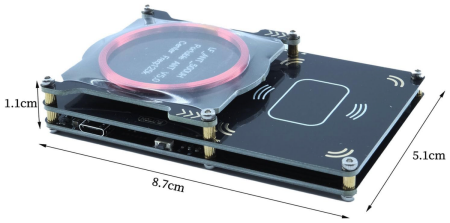
This pocket sized device can copy many widely used access cards in seconds.

Why it matters: 

Over 50% of access cards in use today rely on insecure 125 KHz Prox or Mifare classic technology. 

These cards pose significant risks for enterprises as they can be easily cloned using an inexpensive device available online. 

It is fools gold to replace a PACS without first upgrading to a secure card that is based on PKI technology. 

Revolutionizing security with PIV
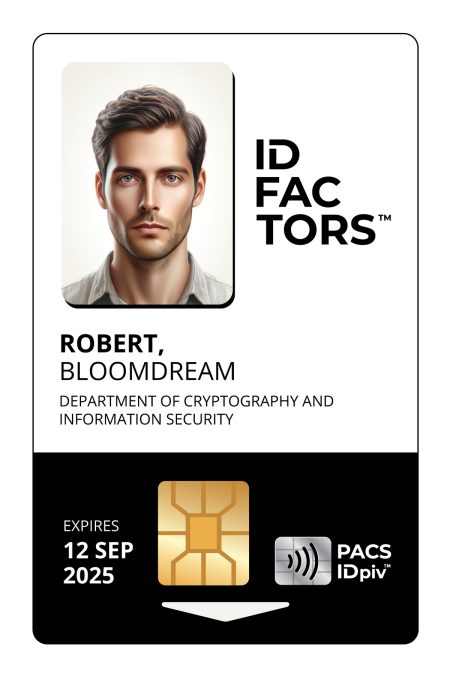
Many global technology firms are adopting the Personal Identity Verification (PIV) standard, first developed by the US Federal Government. The PIV credential has set a new benchmark for secure access by integrating digital certificates for robust authentication. 

Eliminating proprietary cards: PIV does not require secret keys in cards and readers. 

Certificate flexibility: Entities can use their own self-issued public key certificates, enhancing control. 

PKI verification: Cards can be verified as genuine by PKI-enabled readers through challenge-response and digital signature checks. 

The backdrop: Industry solutions like FIDO, PKOC and PK-PACS are adopting the basic PIV platform, pushing the security industry to rethink “PKI in PACS.” 

Cost efficiency: Implementing PKI in a PACS is becoming more affordable, rivaling legacy systems. 

Seamless integration: PKI operates silently, ensuring credential authenticity without complexity. 

Speed trade-off: While PKI may add a second to verify card authenticity, it’s a small price for security. 

PKI implementation in PACS: 

Driving the news: Implementing PKI in a PACS can be done in three ways, each with its own set of requirements and benefits. 

Option 1 – Network of centralized hardware appliances:

Primarily used in the Federal Government on Wiegand systems. 

Requires expensive installation of a separate network of PAM appliances that “centralize” certificate status and report it to the PACS panel. 

Option 2 – OSDP-based access systems: 

Requires PKI-enabled panels and “transparent” readers for centralized PKI processing. 

Requires complete system replacement, including OSDP panels, transparent readers, software, and possibly re-carding users. 

Network hops can add significant time to access being granted.

Option 3 – Distributed PKI by IDFACTORS: 

PKI verification is distributed to each reader for fast local PKI processing. 

Less expensive and disruptive: compatible with both Wiegand and non-PKI enabled OSDP panels. 

Only requires replacing legacy readers with IDFACTORS readers. 

Why it matters:

Each option presents unique benefits depending on the PACS profile, requirements, and budget. 

Distributed vs centralized authentication: 

In the distributed authentication model, the Door Access Reader acts as the “Verifier” of the card when it’s presented for access. This eliminates the need to forward certificate information to a central access panel, reducing data congestion and speeding up system response. 

In contrast, a centralized PKI process requires the access panel to perform cryptographic processing for all connected Readers. This setup necessitates multiple network hops for each Reader, which slows down the verification process and delays access time. 

Learn more. Contact IDFACTORS at www.idfactors.com or email customerservice@idfactors.com. 

What Are the Benefits Of Using A PIV-Based Biometric Reader?

What are the benefits of using a biometric reader

Lost passwords and misplaced access cards frustrate everyone. Many organizations now implement advanced security access readers to address these challenges.

PIV-based biometric readers strengthen access control through unique physical identifiers such as fingerprints, facial features, and iris patterns. Biometrics work especially well with PIV based credentials and access systems using PIV and CAC access readers that are enabled with the biometric scanner.  One reason is the biometric template can be stored directly on the credential, eliminating storage of one’s biometric in a government or corporate database.

This paper demonstrates why biometric authentication could be the security upgrade your organization needs.

Healthcare and Medical Security Benefits

Healthcare facilities are transforming how they protect sensitive information and ensure patient safety. The global healthcare biometrics market will reach USD 14.50 billion by 2025, which shows how this technology has become crucial in medical settings.  The Veteran’s Administration has deployed 3-Factor biometric CAC readers in many of VA pharmacies to protect access to certain drugs.

Biometric readers are changing healthcare security in several keyways:

  • They prevent medical errors through accurate patient identification 
  • They protect controlled substances with secure access controls 
  • They maintain HIPAA compliance through better data protection 
  • They create detailed audit trails for regulatory compliance 
  • They reduce healthcare fraud through identity verification

Patient Safety and Record Protection stands as a top priority in healthcare settings. Biometric security systems can reduce the risk of patient misidentification, leading to medical errors or inappropriate care.

Controlled Substance Management has improved with facial recognition technology. The system automatically logs each retrieval attempt and supports compliance with strict government regulations that also require PIV credentials and readers. Only authorized personnel can access medical cabinets, which creates a clear chain of custody for sensitive medications.

Biometric authentication has made major improvements in fraud prevention by verifying patient identities during enrollment and data access. It works especially well to prevent insurance fraud and unauthorized access to medical services. 

Corporate and Financial Sector Applications

The financial sector leads in biometric security reader adoption. Banks and corporations acquired 3.6 million biometric devices in 2022, which shows how the industry now has a strong sense of control over the protection of assets and verification of identities. This reassures everyone about the effectiveness of these systems.  Many banks are combining PIV readers with biometrics for the state-of-the-art security.

PIV-based biometric readers are changing how companies control access to:

  • Data rooms and research laboratories 
  • Customer experience centers 
  • Product development spaces 
  • Financial service facilities

Enhanced Security and Authentication Biometric security readers – when combined with another factor such as a PIV card – offer better protection against unauthorized access. The unique identifiers on a PIV or CAC card, when properly deployed, are impossible to clone or copy without detection. The financial sector has embraced this technology fully. Facial recognition grows at 11.9% CAGR and should reach 2.5 million annual shipments by 2027.

Educational Institution Implementation

Schools and colleges use biometric security readers nationwide to improve campus safety and optimize operations. Property crime affects 22 out of every 1,000 students, which explains why institutions are moving toward advanced security systems.

Biometric systems now revolutionize campus life in several ways:

  • Quick access to athletic facilities and recreation centers 
  • Better security in research laboratories 
  • Smart management of dining services 
  • Automatic attendance tracking 
  • Secure library systems

Enhanced Campus Security Biometric readers provide better security in student areas while students can access facilities quickly. The technology works better now, and face and palm recognition systems lead the way because they work without physical contact.

Privacy and Implementation Privacy matters most in educational settings. Modern systems protect student information by encrypting biometric data, and fingerprint images remain secure. The system converts measurements into encrypted number codes to safeguard student data.

Practical Benefits Administrative tasks now take less time. Attendance tracking happens faster, which reduces paperwork substantially. Many universities use these systems in their athletic facilities and dining halls, and they report better service speed and accuracy.

Conclusion

PIV and CAC readers, when enabled with PIV-based biometric readers, excel as powerful security solutions in the healthcare, financial, and educational sectors. These systems safeguard sensitive medical data and secure financial transactions. They also create safer educational campuses and streamline daily operations.

Security managers love how these systems eliminate traditional access control problems. Medical facilities can identify patients accurately and track controlled substances better. Educational institutions benefit from enhanced safety. 

IDFACTORS offers biometric-enabled PIV and CAC readers based on the HSPD-12 directive that can be configured to meet validation requirements within any budget. Our team welcomes your questions about these solutions.get. Our team welcomes your questions about these solutions.

A Look Back

By Thomas Corder, CEO of IDFACTORS 

DoD’s first access system that used the Government Smart Card (CAC) was Installed 20 Years ago this Month – let’s look back at how this came to be and what’s next.

The Situation

The DoD first deployed the Common Access Card (CAC) in 1999 as a credential to access secured networks, databases and websites. Shortly after the 9/11 terrorist attacks, a forward-thinking officer in the US Army, LTC Greta Lehman, concluded that a real-world installation of CAC readers for door access was needed.

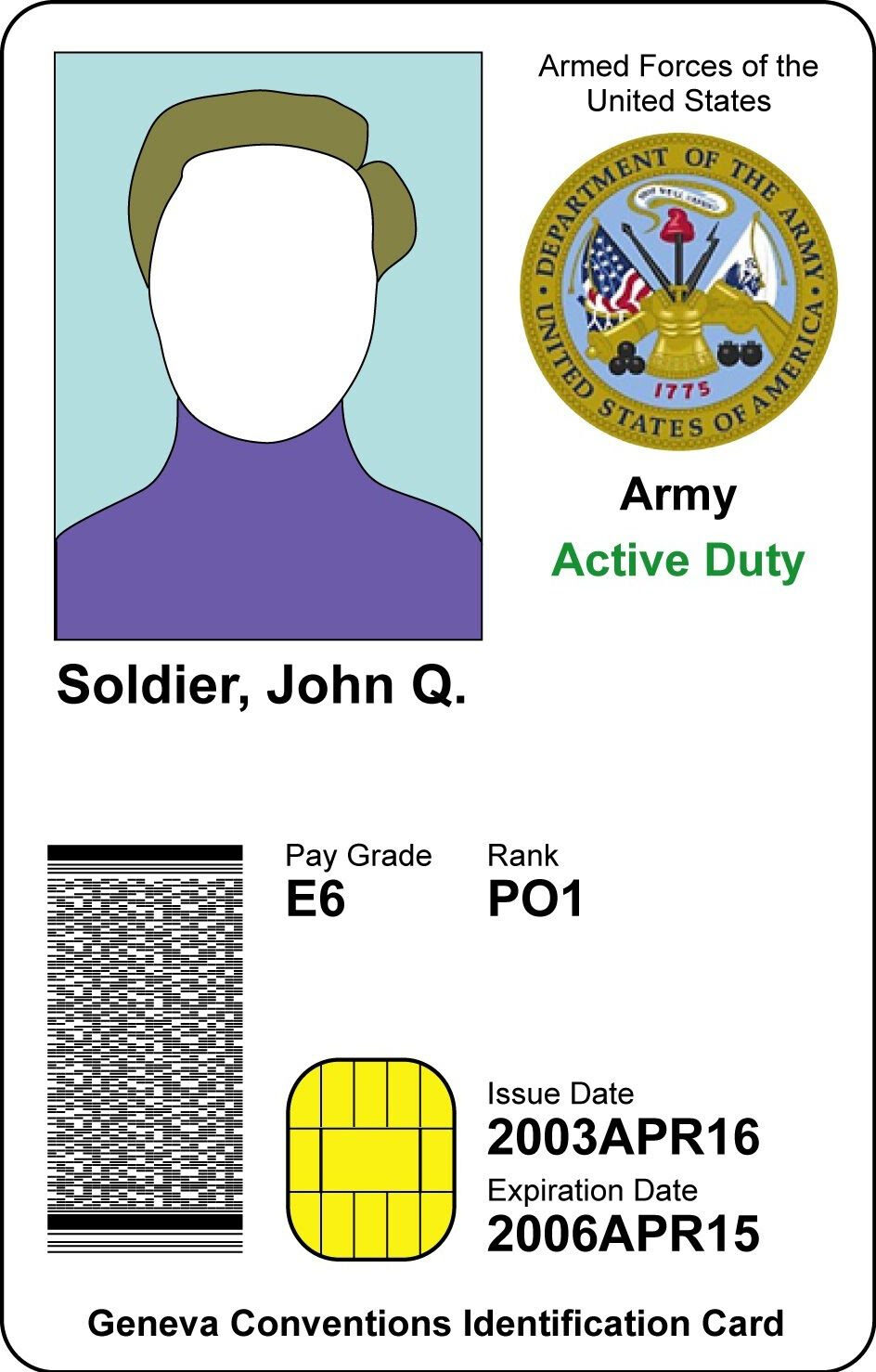
 Government Smart Card (CAC)

LTC Lehman was the senior officer responsible for deploying the CAC, Public Key Infrastructure (CAC/PKI) and Enterprise Biometrics Program globally for the Army’s PEO/EIS at Ft. Belvoir, VA. 

While others in Government wanted to fund lab experiments, in her view “experiments were great but would a CAC reader work in the real world?” She wanted to know.

At the same time, I had been meeting with executives from the DOD DMDC, both in Monterey CA and Washington DC, to demonstrate our smart card reader technology. In January of 2002, through an introduction made by DMDC, I met with LTC Lehman and demonstrated our CAC reader prototype, which was exactly what she wanted to see.

The Challenge

She had been searching for a firm willing to take on the task of using the CAC and Biometrics for door access.  IDFACTORS was one of the few firms in the U.S. with expertise in smart cards, embedded systems and software. 

LTC Lehman dropped a challenge; could we develop and install an 8-door access system at the PEO/EIS building in 8-months? 

  • Requirements included use of the CAC and PIN to grant access during duty hours and CAC + PIN + BIO fingerprint match to grant access during off-duty hours.  
  • And, of course, it had to be managed by software that controlled the doors by personnel access level and record all transactions.

The Solution

In January 2003, our extraordinary team of engineers and technicians successfully installed and commissioned the system at Fi. Belvoir. 

LTC Lehman referred to the mission – which she had named “Lead Dog” – as “very successful” and it lead to other installations at Ft. Rucker, Ft. Hood, Ramstein AFB in Germany, Travis AFB in California and many more.

 Government Smart Card (CAC)
Tom Corder, Founder & President, demonstrating the first Smart Card Door Reader at DoD, Ft. Belvoir VA.

My thought bubble: It still amazes me what LTC Lehman and the team at IDFACTORS were able to achieve in 8 months on a limited budget. There is still a lot of work left, however. Today the Government and the security industry must adopt use of the one secure element on the Government Smart Card; the public key certificate.

The security industry needs to provide more encouragement to Government and the critical infrastructure community to deploy systems that utilize the cryptographic tools available for strong security.

Get custom pricing and
delivery information.

We solve problems.
How can we help?